Tuscany is Timeless
Few places capture the romance and refinement of Italy quite like Tuscany. With its rolling hills, Renaissance art, and vineyards stretching toward the horizon, this region represents the essence of Italian life. Tuscany’s best towns rise from undulating landscapes of cypress-lined roads, golden wheat fields, and vine-covered slopes that have inspired artists and writers for centuries. Perched on sun-drenched ridges, Pienza, Montalcino, and Montepulciano reveal the region’s soul through cobblestone lanes, artisan shops, and some of the world’s most coveted wines. These towns have preserved their architectural heritage while maintaining cultural traditions that span centuries. Unlike sprawling cities, these compact hilltop settlements invite leisurely exploration on foot. Where every narrow alley reveals hidden piazzas, artisan workshops, and family-run trattorias that have served the same recipes for generations. This is Tuscany as you’ve always imagined it—timeless, romantic, and captivating.
Cover photo credit: rky_mfs | Shutterstock.com
The UNESCO-Protected Landscape
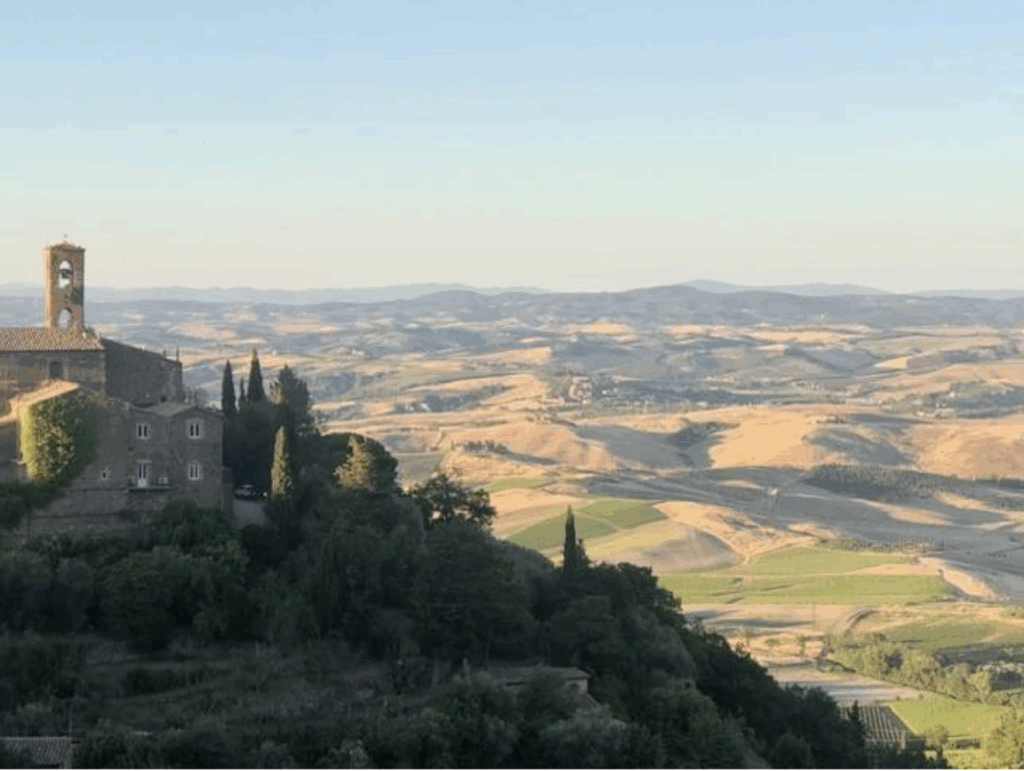
The Val d’Orcia, Tuscany’s southern area, became a UNESCO World Heritage Site in 2004, recognized for its exceptional beauty and as an inspiring example of Renaissance landscape design. Rolling hills transition seamlessly into cultivated fields, creating a patchwork of textures and colors that change with the seasons. The natural light is exceptional and has inspired artists throughout the centuries. Isolated farmhouses, Romanesque churches, and rows of cypress trees punctuate the landscape like perfectly placed brushstrokes. This is the Tuscany of postcards and paintings, yet experiencing it in-person evokes a sense of awe.
Wine, Cheese, and Culinary Excellence
This region produces some of Italy’s most celebrated wines and artisanal foods. Brunello di Montalcino and Vino Nobile di Montepulciano rank among Italy’s finest red wines, while Pienza’s pecorino cheese is revered throughout the country. The commitment to traditional production methods and terroir-driven quality makes every meal a celebration of place.
Pienza: The Renaissance Jewel
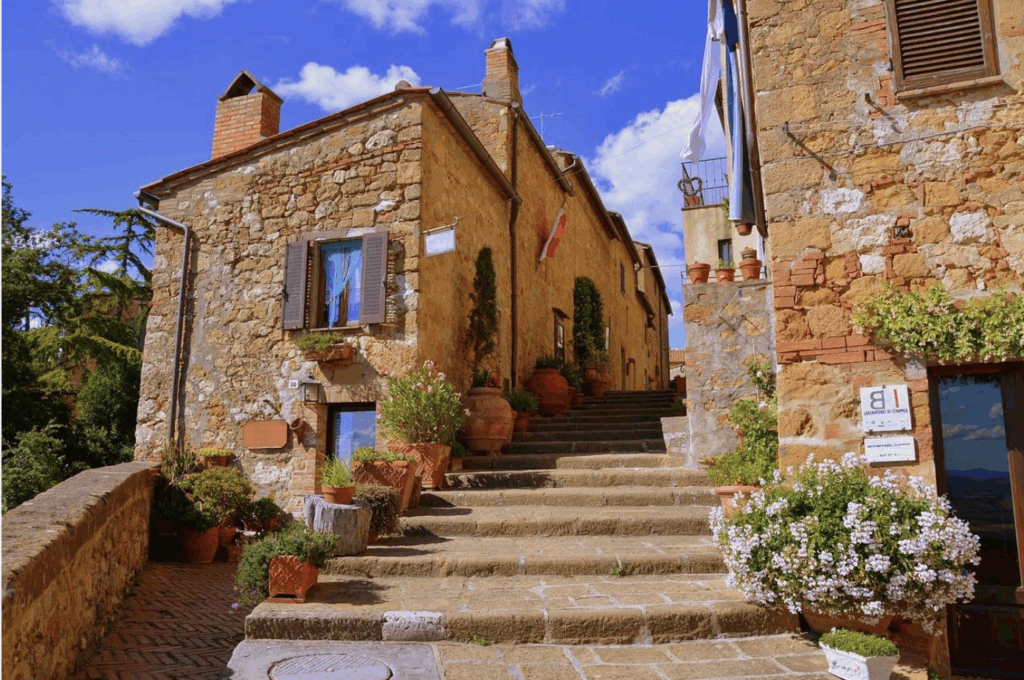
Known as the “Ideal City of the Renaissance,” Pienza is a UNESCO World Heritage Site and one of Tuscany’s most beautifully preserved towns. Commissioned by Pope Pius II in the 15th century as a model of perfect urban planning, Pienza embodies harmony — between architecture, humanity, and nature.
The heart of Pienza is the Piazza Pio II, a perfectly proportioned square surrounded by architectural gems. The Duomo dominates the square with its elegant Renaissance façade. While the interior floods with light through tall Gothic windows—an unusual combination that reflects the Pope’s vision of uniting architectural styles.
The Palazzo Piccolomini, the Pope’s former residence, offers visitors a glimpse into Renaissance life. The palace’s hanging garden provides breathtaking views over the Val d’Orcia—one of the most photographed panoramas in Tuscany. The geometric layout and meticulous design reveal the Renaissance obsession with proportion and perspective.
Stroll along Via dell’Amore (Love Street) and Via del Bacio (Kiss Street), narrow lanes that wind through the historic center, lined with artisan shops, wine cellars, and cafés. The town’s compact size means you can explore in a few hours, yet its charm invites lingering.
Say Pecorino
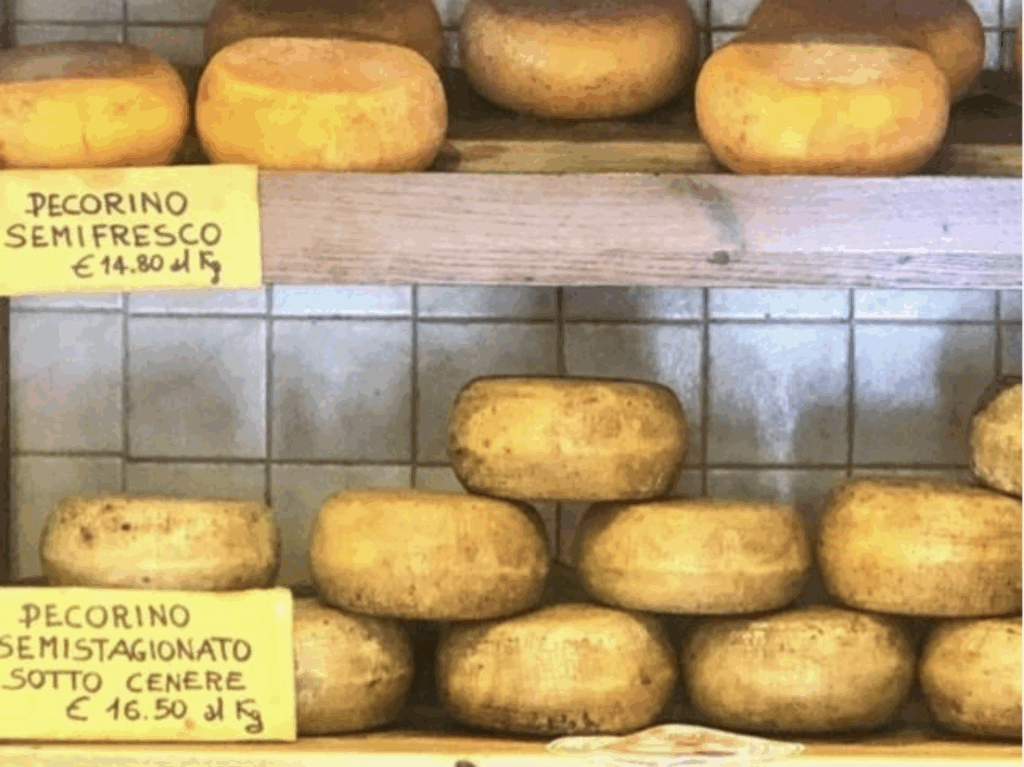
Pienza is synonymous with pecorino cheese, made from the milk of sheep grazing the surrounding hills. The town’s numerous cheese shops offer tastings of pecorino aged in various ways—in chestnut leaves, hay, grape must, or walnut leaves—each imparting distinct flavors. Visit a traditional cheese producer like the Cugusi family’s dairy to understand the craftsmanship behind this ancient product and pack a picnic to enjoy overlooking the Tuscan hills. Pair fresh pecorino with local honey and a glass of Orcia DOC wine for a complete Tuscan experience.
Montalcino: Kingdom of Brunello
If Pienza is Tuscany’s Renaissance heart, Montalcino is its oenological soul. Encircled by vineyards and crowned by a medieval fortress, known as the Fortezza, Montalcino is the birthplace of Brunello di Montalcino, one of Italy’s most prestigious and age-worthy red wines.
Montalcino rises majestically above the surrounding vineyards, its medieval fortress visible from miles away. This fortified town has built its reputation on a single grape variety—Sangiovese Grosso—which produces Brunello di Montalcino. The town’s wine culture permeates every aspect of life where wine shops outnumber restaurants. The Consorzio del Vino Brunello is affiliated with over 200 wineries.
The 14th-century Fortezza dominates Montalcino’s skyline and offers spectacular 360-degree views of the surrounding countryside. Walk the ramparts to appreciate the strategic importance of this hilltop position. The fortress also houses Enoteca la Fortezza di Montalcino where you can sample Brunello di Montalcino wine and other wines while enjoying the views. The enoteca offers more than 1,000 curated wines from around the world and ships too. When you are not sipping wine, wander through the historic center’s steep, narrow streets, discovering small piazzas where locals gather in the evening. The Piazza del Popolo serves as the town’s social heart, lined with cafés perfect for people-watching over an espresso or aperitivo.
Montepulciano: Renaissance Elegance
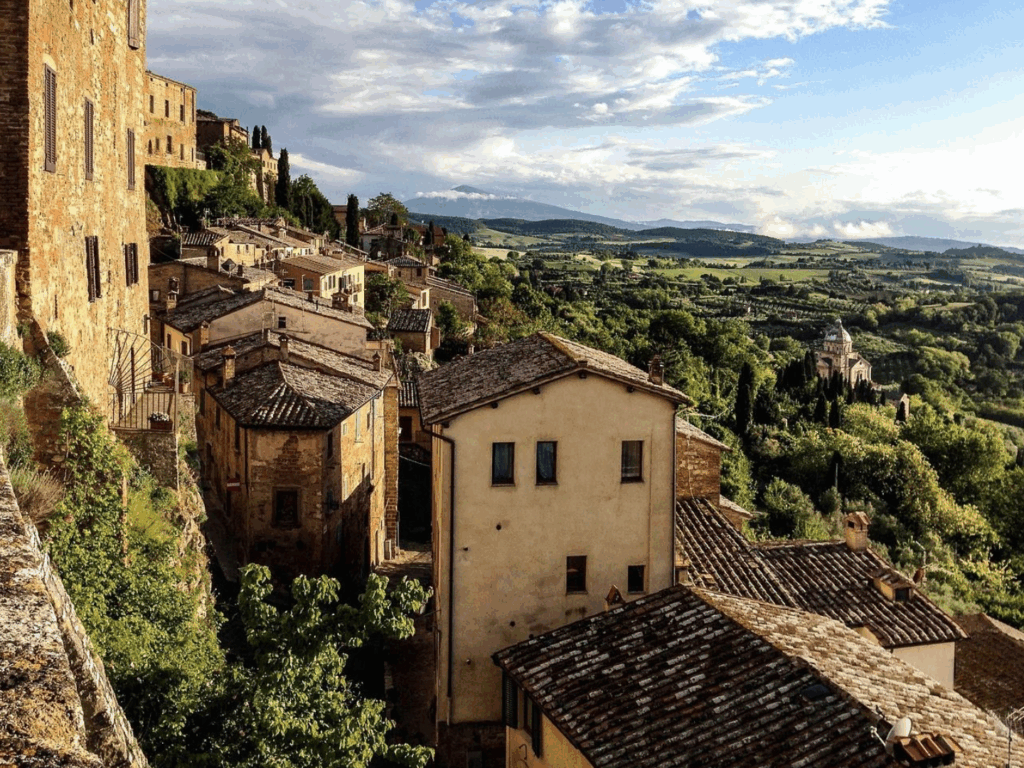
Just 30 minutes from Montalcino lies Montepulciano, another jewel of southern Tuscany. Rising dramatically from a limestone ridge, the town offers commanding views and a rich heritage that blends medieval grit with Renaissance grace. Montepulciano unfolds along a narrow ridge, its Renaissance palaces and churches creating one of Tuscany’s most architecturally distinguished towns. The steep main street, lined with impressive 16th-century buildings, climbs through the historic center to the magnificent Piazza Grande at the summit. The town’s elevation provides commanding views over the Valdichiana and towards Lake Trasimeno which borders the region of Umbria. The sense of height and the dramatic topography give Montepulciano a distinctive character among Tuscan hill towns.
The Piazza Grande represents Renaissance town planning at its most ambitious. The unfinished cathedral façade creates an austere backdrop for the elegant Palazzo Comunale, which visitors can climb for panoramic views. The adjacent Palazzo Nobili-Tarugi and Palazzo Contucci showcase the refined architectural style that wealthy Renaissance families brought to the town.
Via di Gracciano nel Corso, the main thoroughfare, features numerous Renaissance palaces interspersed with wine cellars carved into the tuff beneath the town. The Palazzo Avignonesi and Palazzo Bucelli (with Etruscan urns embedded in its foundation) exemplify Montepulciano’s architectural richness.
The Church of San Biagio, located just outside the town walls, represents Renaissance architecture at its most harmonious. This golden travertine masterpiece, designed by Antonio da Sangallo the Elder, sits in splendid isolation surrounded by cypress trees—one of Tuscany’s most photogenic scenes.
Vino Nobile Montepulciano and Cellar Visits
Montepulciano’s Vino Nobile DOCG wine rivals Brunello in quality and complexity, though it remains slightly less famous and therefore more affordable. The wine combines Sangiovese with small percentages of other local varieties, creating an elegant, structured red wine perfect for aging.
Many historic wine cellars lie beneath the town’s palaces, some dating to Etruscan times. Cantina Contucci, located in a Renaissance palace on Piazza Grande, offers atmospheric tastings in vaulted stone cellars. Cantina De’ Ricci features a stunning underground cathedral carved from tuff, where wine ages in enormous barrels. For estate visits outside town, Avignonesi and Poliziano combine excellent wines with beautiful settings and professional hospitality. These experiences provide insight into modern Tuscan winemaking while maintaining respect for tradition.
Beyond wine tasting and architectural appreciation, Montepulciano offers excellent shopping for local products. Artisanal shops sell copper cookware, hand-painted ceramics, leather goods, and food specialties including pici pasta, wild boar salami, and local honey.
The Museo Civico houses important artworks, including a remarkable collection of glazed terracotta by Andrea della Robbia. The museum provides context for Montepulciano’s role in Renaissance art and culture.
Exploring the Val d’Orcia: Between the Towns
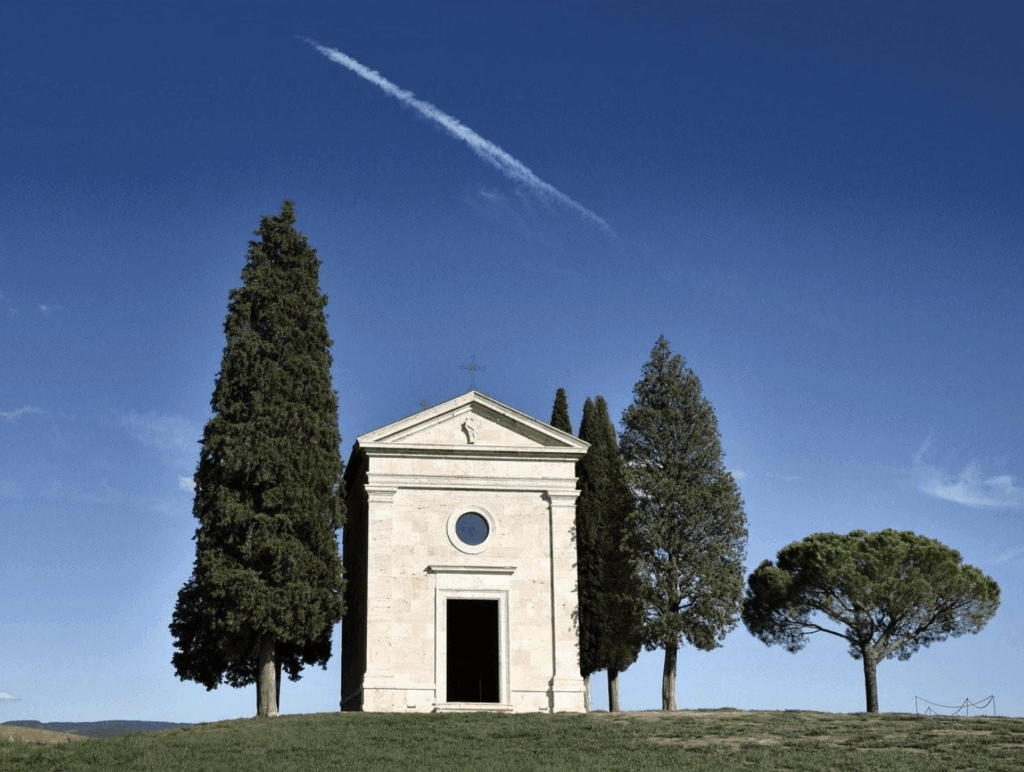
The roads connecting Pienza, Montalcino, and Montepulciano wind through some of Italy’s most beautiful countryside. Drive slowly, stop frequently, and allow time for spontaneous discoveries. The iconic Cappella della Madonna di Vitaleta, a tiny chapel surrounded by cypress trees near Pienza, has become one of Tuscany’s most photographed sites. The nearby cypress-lined road to Monticchiello creates another quintessential Tuscan scene.
Thermal Springs
The region offers several natural thermal springs where you can soak in mineral-rich waters while enjoying countryside views. Bagno Vignoni, a unique village built around a Renaissance thermal pool in its central square, provides both historical interest and modern spa facilities. The free thermal waterfalls at nearby Fosso Bianco allow you to experience the healing waters in a natural setting.
When to Visit
Spring brings wildflowers, green landscapes, and food festivals celebrating new olive oil and pecorino. The mild weather is perfect for exploring. Summer offers long days and vibrant town life, though August can be hot and crowded. But, if you are visiting in July or in August, be sure to also visit the nearby town of Siena for the Palio di Siena, one of the most dramatic and thrilling horse races that has been occurring since 1633. During the fall, harvest season adds excitement along with truffles hunts, wine festivals, and spectacular light for photography. Even winter has its charms, with fewer tourists and a calmer atmosphere.
Timeless Appeal
Pienza, Montalcino, and Montepulciano represent Tuscany’s enduring appeal—the harmonious integration of natural beauty, architectural heritage, and culinary excellence. These towns haven’t been preserved as museums but continue as living communities where traditions remain relevant and quality of life takes precedence over speed.
Walking their medieval streets, tasting wines that reflect centuries of winemaking knowledge, and watching sunset light transform the Val d’Orcia landscape creates memories that endure long after you’ve returned home. This is travel at its most enriching. It’s where beauty, culture, and sensory pleasure combine to create an experience that nourishes the soul.
In these hill towns, you discover not just Tuscany, but a philosophy of life that values craftsmanship, community, and the simple pleasures of excellent food, fine wine, and beauty that surrounds you at every turn. This is why travelers return again and again, drawn by the timeless magic of Tuscany’s medieval treasures.
Contact Us
At Luxury Italian Tours, we craft bespoke itineraries that reveal Tuscany’s most exquisite experiences — from private vineyard tours and stays at Tuscan villas to exclusive guided tours throughout the region. Whether your journey focuses on gastronomy, culture, or iconic scenery, Tuscany’s best towns offer a luxury escape that is timeless.
Contact Luxury Italian Tours to plan your Tuscany luxury vacation and discover the best towns in Tuscany.
Cover photo credit: rky_mfs | Shutterstock.com